
This article is general education, not personalized financial advice. Every financial situation is different. If you are experiencing serious financial distress, please consider speaking with a nonprofit credit counselor or financial professional.
You finally sat down and looked at where your money went last month. Maybe you used the bank app, maybe a spreadsheet. Either way, you saw it. And now a quiet voice is telling you to feel bad about half of it.
That voice usually says the same thing: cut everything. No more eating out, no more coffee, no more anything that is not strictly necessary. It feels responsible. It almost never lasts.
There is a better question waiting on the other side of that list, and it is calmer than “what do I have to give up.” It is simply this: which of these were needs, and which were wants. Not so you can punish yourself. So you can decide on purpose.
The real question: Needs vs. wants is not about cutting every small joy. It is about telling apart the spending that pays you back from the spending that quietly does not.
Why Sorting Needs From Wants Actually Helps
When you try to fix your spending by cutting everything at once, you are fighting your whole life all at the same time. That is exhausting, and exhaustion loses. Within a few weeks the old habits drift back, and now you also feel like you failed.
Sorting needs from wants does something different. It turns one giant, guilt-soaked decision into a handful of small, clear ones. You stop asking “am I bad with money” and start asking “is this particular thing worth it to me.” That second question you can actually answer.
Here is the moment it clicked for me. For years I bought a large iced coffee on the way into work and another in the afternoon. About $3.20 each. On its own, nothing. But two a day, five days a week, most weeks of the year, comes to more than $1,500 a year going out the door one cup at a time. I was not broke because of coffee. But that was exactly the kind of quiet, automatic spending that kept my savings stuck in the same place month after month while I could not figure out why. Seeing it did not make me feel guilty. It gave me a choice I did not know I had.
That is what sorting gives you. Not shame. Choices.
What “Needs” and “Wants” Really Mean
A need is something you cannot skip without putting your health, your housing, or your ability to earn at risk. Rent or mortgage, basic groceries, utilities, transportation to work, insurance, minimum debt payments. If it stops, something important breaks.
A want is everything that makes life more comfortable or more fun but is not essential to keeping the lights on. Eating out, streaming services, the upgraded phone, travel, the second coffee. Wants are not the enemy. A life with zero wants is not a budget, it is a punishment, and nobody sticks to a punishment.
This split is the heart of a well-known guideline called the 50/30/20 rule, which suggests roughly 50 percent of your take-home pay for needs, 30 percent for wants, and 20 percent for savings and debt. It comes from the book All Your Worth by Elizabeth Warren and Amelia Warren Tyagi. It is a useful starting point, and I still think of it that way, though plenty of people land at different numbers depending on where they live and what they earn.
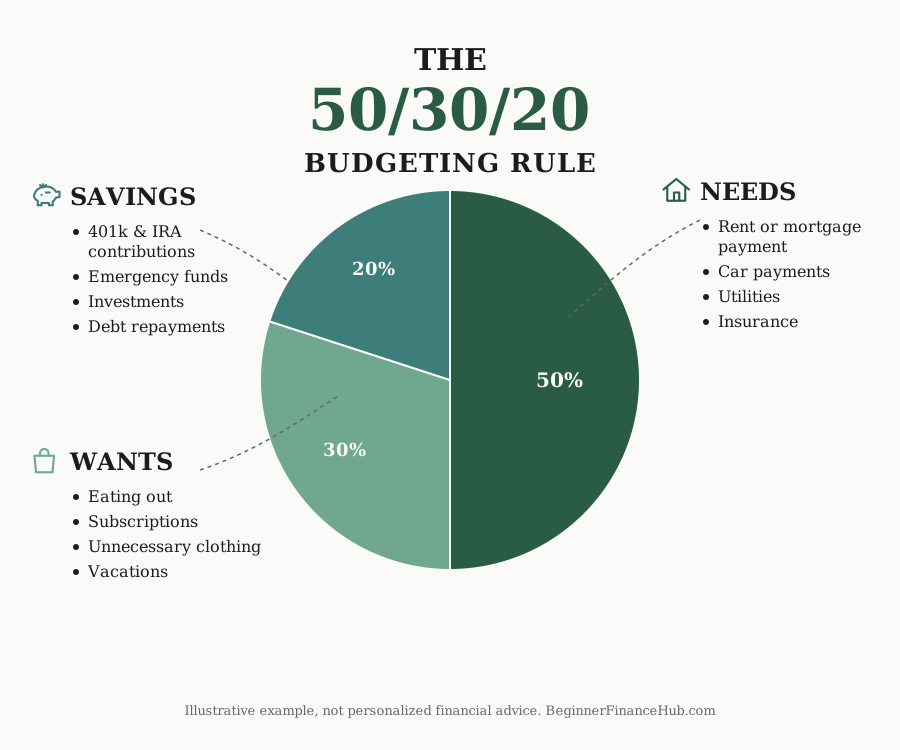
One honest caveat: the same thing can be a need for one person and a want for another. A car is a want if you live where transit is good and a need if it is the only way you reach your job. Do not get stuck trying to win an argument with yourself about the perfect category. Close enough is close enough.
How to Sort Your Spending, Step by Step
Step 1: Start with the list you already have.
This works best right after you have seen a month of your own spending. If you have not done that yet, that is the real first step, and there is a calm walkthrough in How to Start Managing Your Money When It Feels Overwhelming. Come back here with your list in hand.
Step 2: Mark each line as need, want, or in-between.
Go down your spending line by line and tag each one. Use three labels, not two: need, want, and not sure. The “not sure” pile is allowed. Forcing every gray-area purchase into a hard category is how people give up. You can revisit those later.
Step 3: For each want, ask one question.
Look at each want and ask: did this actually pay me back. Did it add real comfort, joy, or connection to my life, or did I barely notice it. This is the question that matters more than the category itself. Some wants are worth every cent. Some are just habit wearing the costume of a treat.
Step 4: Pick one low-value want to trim.
Not ten. One. Find a single want that, looking back, gave you very little in return, and decide to scale it back this month. For me it was making coffee at the office instead of buying it, and bringing lunch instead of buying it in the city. Small, almost boring. Over time my savings went from stuck to climbing, from $30,000 to $40,000 to $60,000 and onward. Small swaps like that were not the whole story, but they were where the momentum started.
Step 5: Keep the wants that matter, on purpose.
This is the step people skip, and it is the one that makes the whole thing last. Choose the wants that genuinely add to your life and keep them without guilt. When a want is a deliberate choice instead of an accident, it stops being something to feel bad about. It becomes part of a life you actually picked.
Tip: If a want is automatic, like a subscription or a daily habit, it is worth a closer look. The spending you never decide on is the spending most likely to be quietly draining you.
Going Deeper: Treat the Percentages as a Guide, Not a Cage
Once the sorting feels natural, you might wonder whether your split is “right.” This is where the 50/30/20 numbers can help, as long as you hold them loosely.
If your needs eat up far more than half your income, that is not a personal failing. It is information, and often it points at the big rocks like housing or transportation rather than the small treats you have been feeling guilty about. If you have more room, you do not have to spend a full 30 percent on wants just because a rule says you can. I save more than the rule suggests, partly because I learned that the joy of buying something tends to fade fast, while the security of having a cushion does not.
You also do not need to check this constantly. When you are starting out, looking once a month keeps you honest and shows progress. After a year or so of steadier habits, every few months is plenty.
Start with the sorting. Come back to the percentages later, if at all.
A Note on How This Feels
Looking at your wants can stir up guilt, especially if you have been told that any spending on yourself is irresponsible. If that comes up for you, it is worth knowing it is incredibly common, and it is not a sign you are bad with money.
Wanting things is not a character flaw. I spent years feeling that buying anything for myself was something to apologize for, and it took me a long time to learn the calmer truth: spending is genuinely fun, but the lift from most purchases fades quickly, so the trick is simply to aim your money at the few things that actually stay good. That is not deprivation. That is just paying attention.
You are not here to prove you can live on nothing. You are here to make your spending match what you actually care about. That is a kinder goal, and it is the one that lasts.
Your One Next Step
Open the spending list you already have and tag just one purchase as a need or a want. One line. That is the whole step. You are not building a budget today. You are learning to see your money clearly, one honest label at a time.
Quick Recap
- Needs vs. wants is not about cutting everything, it is about telling apart the spending that pays you back from the spending that quietly does not.
- Sort your existing spending into need, want, and not sure, then trim one low-value want while keeping the wants that matter on purpose.
- Use the 50/30/20 split as a loose guide, not a rule to obey, and adjust it to your real life.
Common Questions
How do I know if something is a need or a want?
Ask what happens if you do not buy it. If skipping it puts your health, housing, or ability to work at risk, it is a need. If life would be a little less comfortable but still fine, it is a want. Many costs sit in between, and that is normal.
Do I have to cut all my wants to save money?
No. Wants are a normal part of a healthy budget, not a problem to erase. The useful move is to keep the wants that genuinely add to your life and trim the ones that quietly do not. That is a gentler and more lasting change than cutting everything.
Is the 50/30/20 rule realistic if I live somewhere expensive?
It is a starting point, not a law. In a high-cost area your needs may take more than half your income, which leaves less for wants and savings. Treat the numbers as a loose guide and adjust them to your real situation rather than forcing your life to fit the rule.
Resources
These tools can help you sort and track your spending. None of these are endorsements, and this site has no financial relationship with any of them. They are starting points.
- How to Start Managing Your Money When It Feels Overwhelming (the first step: seeing where your money goes, before you sort it)
- Google Sheets Household Budget Template (free, works in any browser, easy to label spending as needs or wants)
- Consumer Financial Protection Bureau: Budgeting (free government resource with plain-language budgeting basics)
John Cho is the founder of BeginnerFinanceHub.com, a resource for people who are new to personal finance and want a calm, clear place to start. Learn more about John